A dining table is far more than just a place to eat. It’s where families gather for meals, friends come together for celebrations, and daily conversations happen over morning coffee. Because it plays such a central role in your home, choosing the right dining table is a decision worth taking your time over. The right dining table can completely transform your dining space, making it feel spacious, inviting, and practical, while the wrong one can make the room feel cramped or awkward.
Why the Right Dining Table Matters
Dining table is the heart of the room. It affects the flow of the space, the comfort of your guests, and even how your home looks and feels. A well-chosen table doesn’t just provide a surface for meals; it defines the dining area, complements the décor, and enhances your daily living experience.
For example, in a small dining room, a carefully sized table can create a sense of openness, while in a large room, the right shape and design can make the space feel cosy rather than empty. Essentially, a quality dining table is both functional and a design statement and finding the balance is key.
Size and Shape: Getting the Proportions Right
Size
One of the biggest mistakes people make is choosing a table that’s too big or too small for their room. Take accurate measurements of your dining area, and always leave at least 90–100 centimetres of space around the table so chairs can be pulled out easily and people can move freely.
Consider how many people usually eat at your table:
- Small families or couples: A 4-seater table is usually sufficient and keeps the room feeling open.
- Larger families or frequent entertainers: Look for 6–8 seater tables, or consider extendable models that provide extra space when needed.
Shape
The table’s shape affects both its practicality and the style of your dining room:
- Rectangular: The most common shape, ideal for long or narrow rooms, and can seat many people efficiently.
- Square: Works well in square-shaped rooms, usually for 4–6 people, offering a balanced look.
- Round: Perfect for encouraging conversation, especially in smaller or informal spaces. The lack of corners makes it safer for children too.
- Oval: Combines the efficiency of a rectangle with the softness of a circle, offering a stylish and practical compromise.
The shape should complement both the room and the way you use the table. For example, a round table works beautifully for casual dining or small spaces, while a rectangular table is great for formal dining or large family gatherings.
Materials and Durability
Dining tables come in many materials, and the right one depends on your lifestyle, budget, and the look you want to achieve:
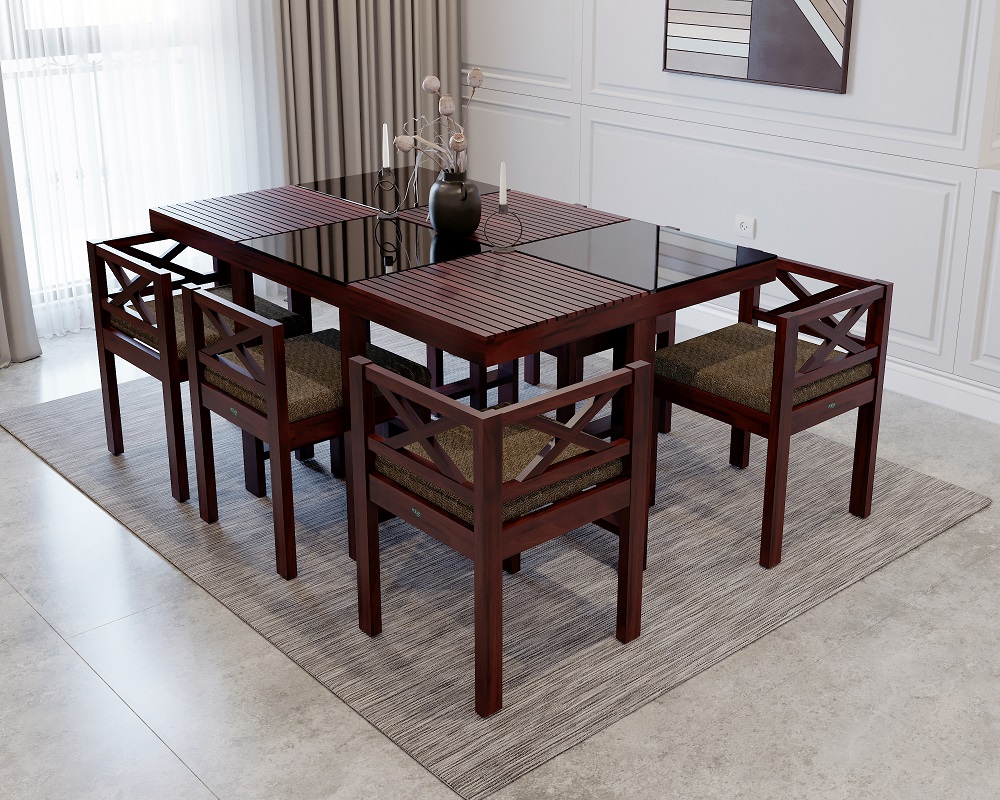
- Wood: A classic choice. Solid wood tables are durable, long-lasting, and versatile in style. Veneer or engineered wood options can be lighter on the wallet but may not last as long. Wood adds warmth and character to almost any dining room.
- Glass: Modern, sleek, and visually light. Glass tops can make a room feel more open and airy, perfect for smaller spaces. They do require more frequent cleaning and are more delicate than wood or metal.
- Metal: Industrial and contemporary styles often feature metal frames or tops. They are sturdy and durable but can feel cold or heavy in a small room if not paired with warmer textures.
- Mixed materials: Combining wood, metal, or glass creates a visually interesting piece that can bridge different styles and add personality to the room.
Think about how the table will be used day-to-day. If you have young children or entertain often, durable and easy-to-clean materials will save you stress in the long run.
Functionality and Flexibility
A dining table is more than just a surface; it should suit the way you live:
- Daily meals: Comfort and durability are paramount. Look for a table that can handle frequent use without scratching or wobbling.
- Entertaining: Extendable tables are a smart investment. They provide extra seating when needed and fold back down to save space.
- Multi-purpose rooms: If your dining area doubles as a workspace or study area, consider a table with a practical height, a sturdy surface, and easy-to-clean materials.
Some tables come with additional features such as drawers or shelves, which can help keep cutlery, placemats, or small kitchen accessories organised and within reach.
Style and Aesthetics
Your dining table should complement the overall style of your home. Consider colour, finish, and design carefully:
- Classic wood finishes bring warmth and timeless charm, fitting traditional or rustic interiors.
- Glass or metal creates a modern, minimalist look that can make a room feel light and airy.
- Neutral tones are versatile and can work with any décor, while bold colours or unique patterns can make the table a statement piece.
Chairs also play a key role. While matching sets are common, mixing and matching chairs. For example, pairing wooden chairs with upholstered seats — can add character and personality to your dining area.
Practical Tips
Here are some quick tips to make sure you choose a dining table that’s both functional and stylish:
- Always leave enough space for chairs to slide back comfortably.
- Test the table for sturdiness before buying — it should feel solid with no wobble.
- Consider extendable tables for flexibility in entertaining.
- Think about maintenance: solid wood may need polishing, glass needs cleaning, and metal should be protected from scratches.
- Match the table’s height with your chairs for ergonomic comfort.
Final Thoughts
Choosing the perfect dining table is about balancing size, shape, material, and style with your lifestyle and space. A table that fits your room well will not only be functional but also become a central part of family life and entertaining. Thus, take the time to choose the right one, and it will serve as a practical, stylish, and inviting focal point in your home for years to come.